High School Character Design: Versatile SVG & PNG Assets for Education and Creativity
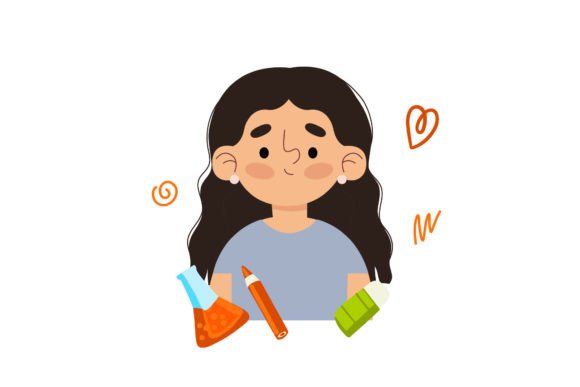
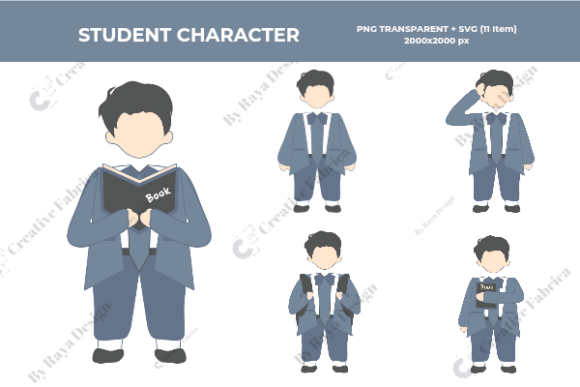
Whether you're designing a back-to-school newsletter, creating classroom stickers, or building an inclusive learning app, High School Character assets bring warmth, clarity, and cultural resonance to your projects. This curated set of 11 ready-to-use illustrations—delivered in both scalable SVG and high-resolution PNG with transparent background formats—was crafted with educators, designers, and small-business creators in mind. Each character reflects authenticity and approachability: a confident boy in uniform, a focused young woman studying, a smiling Muslimah in hijab holding a notebook, and more—all unified by clean lines, thoughtful proportions, and gentle expression.
Why These Characters Stand Out in Educational Design
Not all school-themed illustrations are created equal. Many generic avatars feel stiff, overly cartoonish, or unintentionally exclusionary. The High School Character collection avoids those pitfalls by balancing simplicity with specificity. Take the “Muslimah studying” figure: she’s not defined solely by her hijab—her posture, open textbook, and engaged gaze communicate curiosity and diligence. Similarly, the “boy with backpack” isn’t just a silhouette; his slight smile and upright stance suggest readiness—not passivity. These subtle cues make the characters feel like real students, not decorative afterthoughts.
This attention to narrative detail directly supports inclusive education design. When learners see themselves reflected—whether through gender expression, cultural identity, or learning context—they’re more likely to engage deeply. Teachers report higher participation when digital handouts or printed posters feature diverse, relatable figures. And for developers building edtech tools, using these assets helps meet accessibility and representation goals without requiring custom illustration work.
11 Characters, One Cohesive Visual Language
The set includes exactly 11 distinct figures—each optimized for versatility across platforms and purposes:
- A focused boy in a crisp school shirt, holding a pen
- A thoughtful woman reviewing notes at a desk
- A cheerful Muslimah in pastel hijab, smiling while reading
- A confident student presenting with a tablet
- A collaborative pair—one boy, one woman—working side-by-side
- A teacher guiding a student (gender-neutral attire, warm demeanor)
- A university-bound teen holding acceptance letter
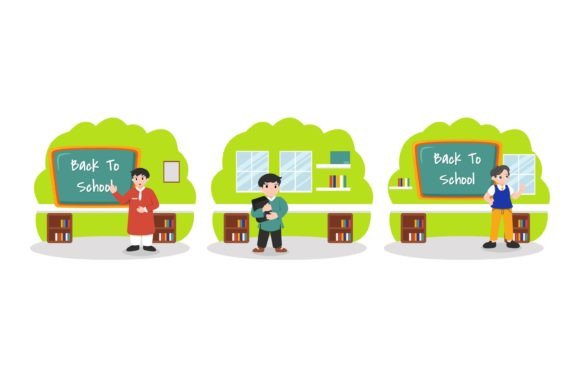
- A back-to-school scene: student adjusting backpack near lockers
- A learning icon: student pointing to a diagram on a whiteboard
- A study moment: quiet focus with headphones and notebook
- A gratitude-focused Thank you pose—hand over heart, gentle smile
What ties them together isn’t uniform clothing or rigid poses—it’s consistent line weight, harmonized color palette (soft blues, warm neutrals, muted greens), and intentional negative space. That cohesion means you can mix and match across slides, worksheets, or web banners without visual dissonance.
SVG vs. PNG: Choosing the Right Format for Your Use Case
You’ll receive every High School Character in two essential formats—and knowing when to use which makes all the difference.
SVG files shine in digital environments where scalability and interactivity matter. They’re perfect for:
- Responsive websites or LMS dashboards (no pixelation on retina screens)
- Animated learning modules (easily manipulated with CSS or JavaScript)
- Customizable UI elements—think hover effects on student avatars in a progress tracker
PNG transparent files, meanwhile, excel where pixel-perfect control is non-negotiable:
- Printed materials—stickers, flashcards, bulletin board cutouts
- Social media graphics (Instagram carousels, Pinterest infographics)
- Overlaying characters onto photos or textured backgrounds without white boxes
Pro tip: Use SVG for web-first projects and PNG when exporting static visuals for physical products or multi-platform sharing.
Real-World Applications You Can Start Today
You don’t need a design degree to get value from these assets. Here’s how educators, entrepreneurs, and content creators are already putting High School Character illustrations to work:
A homeschool mom uses the “study” and “learning” characters to label weekly schedule boards—replacing clipart with friendly, grounded figures that her children recognize and relate to. She layers the PNGs over pastel-colored paper textures in Canva, then prints and laminates them for reuse.
An edtech startup integrated the SVG versions into their quiz platform. When students complete a module, a celebratory animation plays—featuring the “Thank you” character waving gently. Because it’s SVG, the animation stays crisp on mobile, tablet, and desktop alike.
A small sticker shop turned the full set into themed packs: “Back to School Essentials,” “Study Squad,” and “Faith & Focus.” Each sticker uses the transparent PNGs so they adhere cleanly to laptops, water bottles, and notebooks—no awkward white edges. Customers especially love the Muslimah and university-bound characters, citing how rarely they see such respectful, joyful representation in school supplies.
Designing With Intention: What to Consider Before You Download
Before adding these to your workflow, ask yourself three practical questions:
- Who is the primary audience? If your material targets teens in diverse communities, prioritize characters reflecting varied ethnicities, attire, and learning styles—not just one “default” look.
- Where will this live? A character that reads clearly at 48px on a mobile app may vanish in a 12pt handout. Test visibility early—especially for younger readers or users with visual preferences.
- Does it support the message—or distract from it? Avoid overloading slides with multiple characters unless each serves a clear purpose (e.g., showing collaboration vs. solo work). Sometimes one well-placed High School Character says more than five.
Also worth noting: All files are royalty-free for commercial and personal use—no attribution required. That means whether you’re selling printable planners on Etsy or building internal training for a school district, you’re covered.
Beyond Decoration: How These Assets Support Learning Culture
Visuals shape perception—often silently. A worksheet dotted with generic clipart signals “this is routine.” But a carefully chosen High School Character, placed beside a reflection prompt (“What did you learn today?”), subtly affirms: You belong here. Your thinking matters. Your identity is welcome.
In classrooms embracing social-emotional learning (SEL), these figures become quiet anchors. A student might point to the “woman reviewing notes” and say, “That’s how I want to feel—calm and prepared.” Another may connect with the “Muslimah” character during a unit on global education, sparking authentic discussion about values, goals, and belonging.
And for creators running educational shops? These assets aren’t just time-savers—they’re trust-builders. When customers see thoughtful representation baked into your designs—from the “back to school” bundle to the “Thank you for shopping” sticker—they sense intention. That builds loyalty far beyond a single download.
Ultimately, High School Character isn’t just about aesthetics. It’s about clarity, respect, and utility—woven into every curve, stroke, and transparent pixel. Whether you’re sketching lesson plans at midnight or launching your first digital product, these 11 figures offer more than visual polish. They offer presence.